
Robotics Competition Singapore: Parent & Student Guide
Winning a robotics competition Singapore offers can feel confusing because each event runs with its own rules and formats.
To give your child a real chance, you need to pick the right competition, study the rulebook, start building early, and practice under timed, match-style conditions.
Many parents only read the details on scoring, judging, and hardware limits a few weeks before match day.
By then, robots look rushed, kids feel stressed, and the whole experience turns into panic instead of learning.
This guide explains the main competition options, how to match them to age and experience, a clear seven-step preparation plan, and how academies such as Meta Robotics help children build long-term competition skills so you can plan this season with confidence.
Key Takeaways
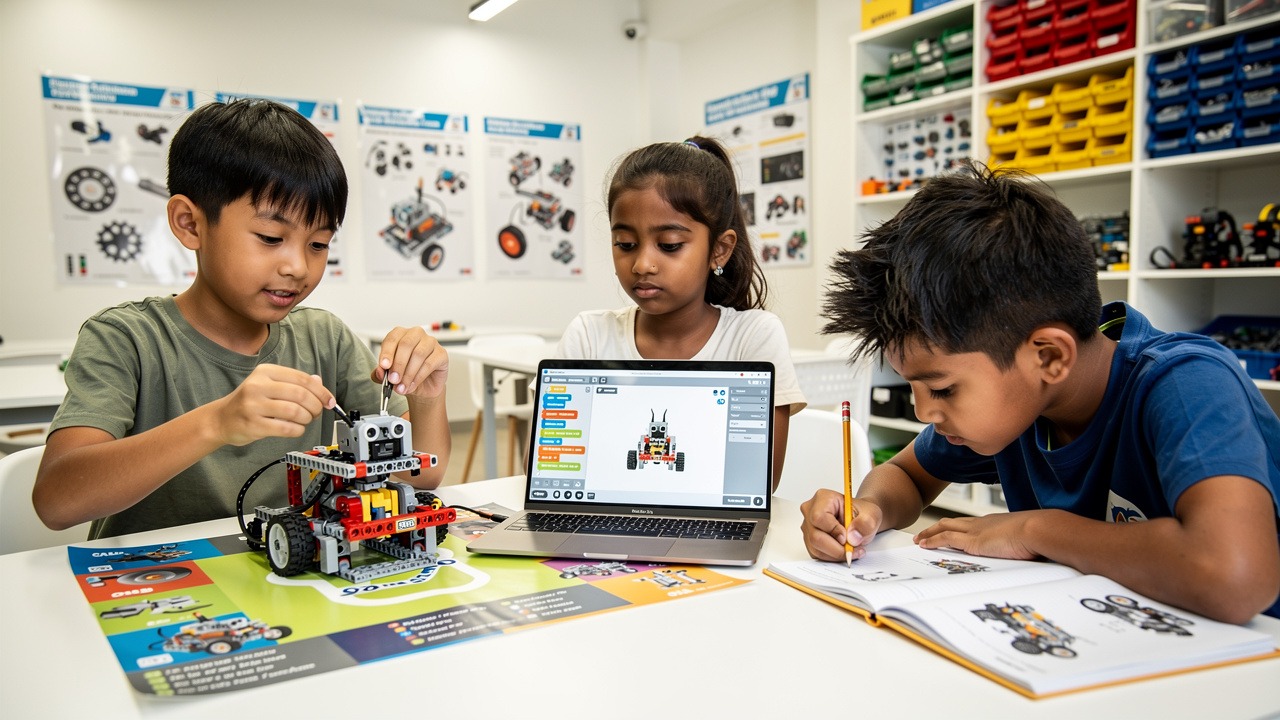
Before getting into details, here is a quick summary of how to approach any robotics competition Singapore offers.
- Singapore has two main frameworks, the National Robotics Competition (NRC) and VEX Robotics, each suiting different ages and goals. When parents understand how these events run before signing up, every training hour feels focused instead of random.
- The best event for a child depends on age, experience, and interest, not prestige. A simple seven-step plan rules, past winners, team roles, early building, realistic practice, technical tuning, and workshops keeps teams calm and ready on match day.
- Structured programmes at Meta Robotics plus steady support at home turn practice into confidence. With early planning and the right category, kids gain more than trophies, from DSA portfolio pieces to lasting interest in STEM.
What Is the Robotics Competition Scene in Singapore?
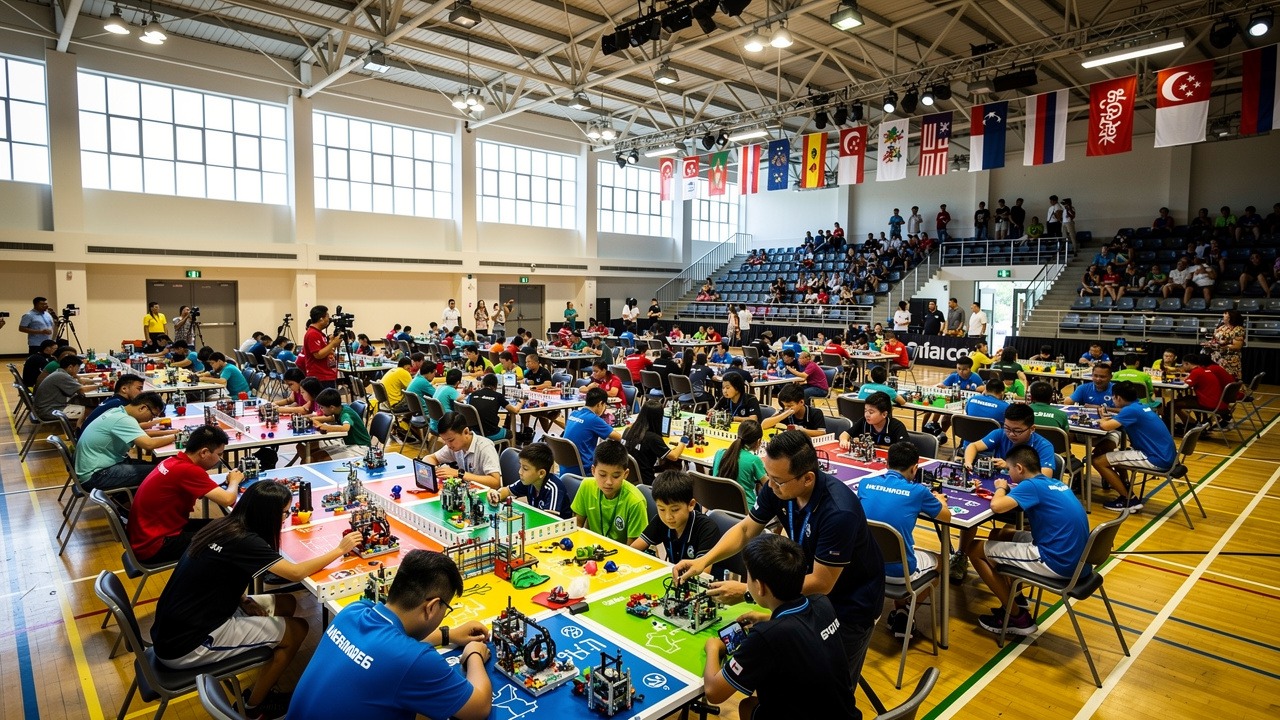
The robotics competition scene in Singapore is a nationwide set of events that build coding, problem‑solving, and teamwork from preschool to tertiary level.
Most families start with the National Robotics Competition (NRC) and VEX Robotics, two systems that anchor almost every major robotics competition Singapore runs each year.
According to Science Centre Singapore, the NRC has engaged more than 68,000 participants and 250,000 supporters since 1999, with tracks ranging from KUBO challenges for preschoolers to LEGO®‑based autonomous matches and AI maker events for teens and tertiary students, all supported by the Ministry of Education.
Rules are strict on size, hardware, and safety so students experience something close to real engineering work, not just playtime.
VEX Robotics connects Singapore students to global events, including the annual VEX Robotics World Championship.
VEX Robotics reports more than 11,500 teams in the VEX Robotics Competition and over 8,500 in VEX IQ worldwide each season, and local scrimmages and qualifiers here feed into that path for students who dream of engineering or computer science careers.
For SME owners and education brands, these events also create active communities of parents, teachers, and young builders.
For schools, enrichment providers, and parents, NRC and VEX stories are valuable because they show real student skills through building, coding, testing, and teamwork not just classroom claims.
Which Robotics Competition in Singapore Is Right for Your Child?
The right robotics competition in Singapore for your child depends mainly on age, current skills, and interest.
Choosing a good fit avoids burnout, saves money on hardware, and gives kids a fair chance to enjoy the season.
Within the NRC, the Regular Category suits children who enjoy building and coding autonomous LEGO® robots.
Lower and upper primary groups typically use LEGO® SPIKE Essential, SPIKE Prime, or MINDSTORMS EV3, while older students may shift to platforms such as Makeblock or TETRIX, with judges scoring how reliably the robot completes missions on a randomized field.
The Open Category fits kids who love inventing gadgets to solve real problems.
Teams design almost any kind of robot or prototype with few hardware limits, then present a project that blends engineering ideas, innovation, and basic business thinking.
The AI Maker Series moves into Artificial Intelligence and Machine Learning, where robots drive on a track and detect mission cards using trained models, while preschoolers start with the KUBO Challenge, which introduces coding through tangible tiles and simple missions instead of screens.
VEX IQ, for ages roughly 9 to 14, mixes teamwork matches, solo robot‑skills runs, and STEM research projects.
Older students, usually 11 to 17, enter VEX V5, which adds alliance matches and online challenges such as CAD and animation.
VEX Robotics reports that 95% of participants feel more interested in STEM subjects after joining, a finding consistent with broader research on STEM Outside of School showing informal STEM education significantly boosts student interest and attitudes, which reassures parents who invest time and fees.
How to Prepare Your Child to Win a Robotics Competition in Singapore

Preparing a child to win a robotics competition in Singapore starts with structure, not last‑minute cramming.
Winning teams follow a similar pattern every season: understand the rules, build early, and practice under real pressure.
Start with the rulebook.
Download the latest rules from Science Centre Singapore for NRC or from VEX Robotics for VEX events and read them with your child.
Highlight robot size limits, allowed hardware, scoring zones, penalties, and judging rubrics so you avoid easy mistakes such as touching the robot outside base or using unapproved parts.
Coaching Tip: Print the rulebook and let your child do the first round of highlighting. Children take rules more seriously when they feel responsible for spotting them.
Next, study past competitions.
Watch videos of winning NRC runs, VEX IQ teamwork matches, or RoboCup Singapore games on YouTube and point out how top teams route their robots, use sensors, and design attachments for fast mission changes.
Research from the Nielsen Norman Group shows that people learn skills faster when they study real examples rather than theory, and robotics is no exception.
Now build a clear team structure with three main roles:
- Lead builder – focuses on mechanical design and stability, handling chassis layout, attachments, weight balance, and quick repairs on competition day.
- Main programmer – writes and tests the code in block‑based tools, Python, or C++, tunes sensors, plans autonomous routines, and keeps versions backed up; in NRC AI Maker Series they also manage data collection and model training.
- Project manager – tracks deadlines, engineering notebooks, and presentation slides (especially for NRC Open and VEX STEM projects), schedules test sessions, and helps the team stay calm when things break.
Start building and coding early, ideally as soon as the challenge is released.
Teams that begin in the first few weeks can try several robot frames, test gear ratios, and rework failing ideas without panicespecially important for AI Maker Series, where training and tuning models often takes many attempts, a process illustrated in studies such as this work on developing an urban landscape fumigation service robot using machine-learned, AI-based design trade studies.
Practice under realistic conditions.
Recreate the NRC or VEX field as closely as you can, run timed trials that mirror official match times, and record scores on a visible chart.
Children start to treat each run like a real match, which builds focus and resilience.
Then refine for speed and accuracy advances in robotics design, such as research on 3D printing-enabled soft continuum robots with integrated sensing and machine learning, show how iterative sensor calibration and mechanical refinement are standard practice even in professional engineering.
Clean up code paths, remove unnecessary blocks or pauses, calibrate sensors on the same floor type you expect at the venue, and tighten wheels or guides so the robot does not drift and waste seconds.
Finally, plug into the community.
Look out for holiday camps and workshops from Meta Robotics, FIRST Robotics groups, IEEE chapters, or local enrichment centres that cover advanced topics such as autonomous navigation or basic machine learning.
These sessions let students ask questions, meet mentors, and learn tricks that are hard to pick up alone research on afterschool museum outreach interventions confirms that hands-on STEM programmes outside the classroom produce measurable improvements in children's STEM outcomes.
Schools and academies that share these learning experiences with parents also help families see the value of robotics beyond trophies, creating stronger support for students over time.
How Meta Robotics Trains Kids to Compete and Succeed
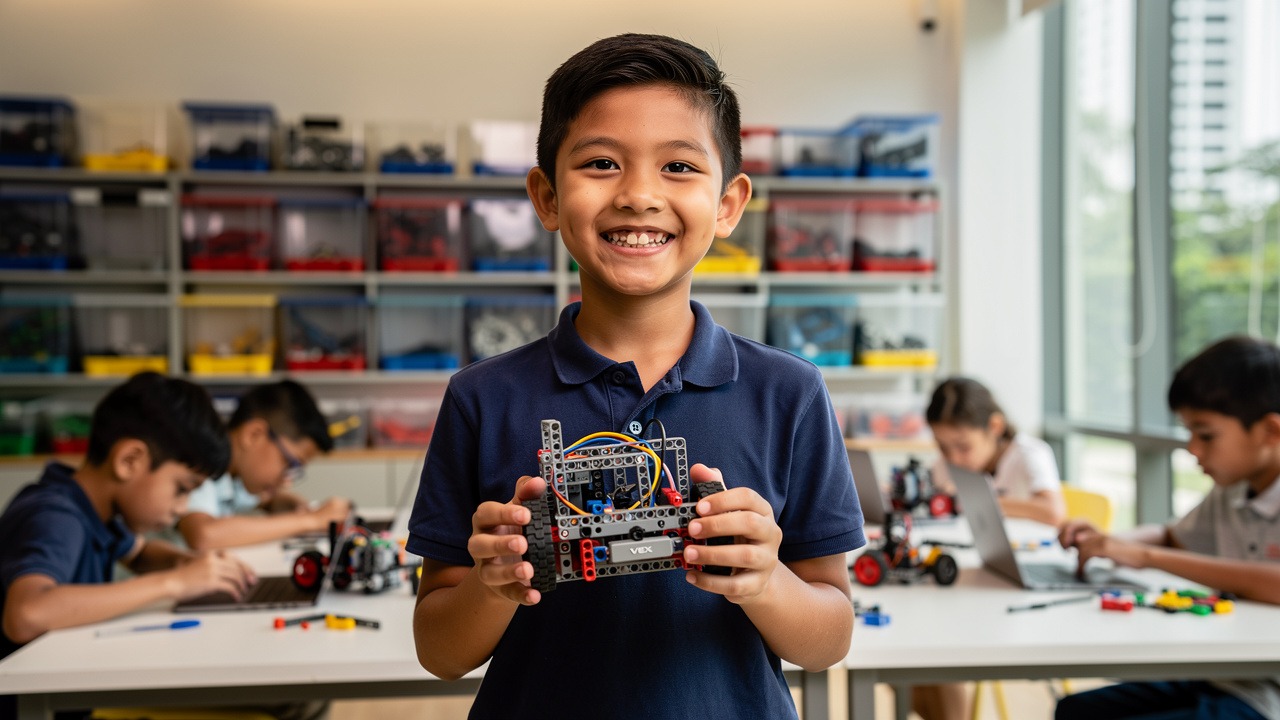
Meta Robotics prepares children for robotics competition Singapore events by building thinking habits and technical skills step by step instead of cramming just before NRC or VEX.
Children follow age‑based programmes that grow with them over several years, helping them become confident problem‑solvers, not just coders.
The academy is based in Singapore, with centres at Bukit Timah, Jurong East, Katong, Novena, Punggol, Tiong Bahru, and Upper Thomson.
According to Meta Robotics, lessons use its proprietary NEBULA™ Neuro-Builder model to strengthen logic, focus, resilience, and confidence through structured LEGO®‑based challenges, so younger children can see their code working in physical builds.
Programmes are aligned with common competition ages:
- Adapter Programme (ages 3–4): builds early science and maths ideas using simple bricks, stories, and fine‑motor activities.
- Ranker (ages 5–6): introduces basic robotics and coding concepts that map well to NRC preschool missions and early Regular Category tasks.
- High Ranker (ages 7–9): adds game‑style challenges and multi‑step problem‑solving, preparing children for primary‑school NRC or VEX IQ events.
- Ace (ages 10–12): covers Robotics STEM, coding, games, animation, and early machine learning for NRC Open projects and the AI Maker Series.
- King (ages 13+): deepens science, maths, and coding topics that support VEX V5 and NRC secondary or tertiary tracks.
Across these levels, students practise habits used by winning teams testing, debugging, clear documentation, and explaining their work to judges.
Parents can also use these projects as meaningful milestones, showing how their child has grown in confidence, creativity, technical ability, and problem-solving through robotics.
Why Robotics Competitions Matter Beyond the Trophy
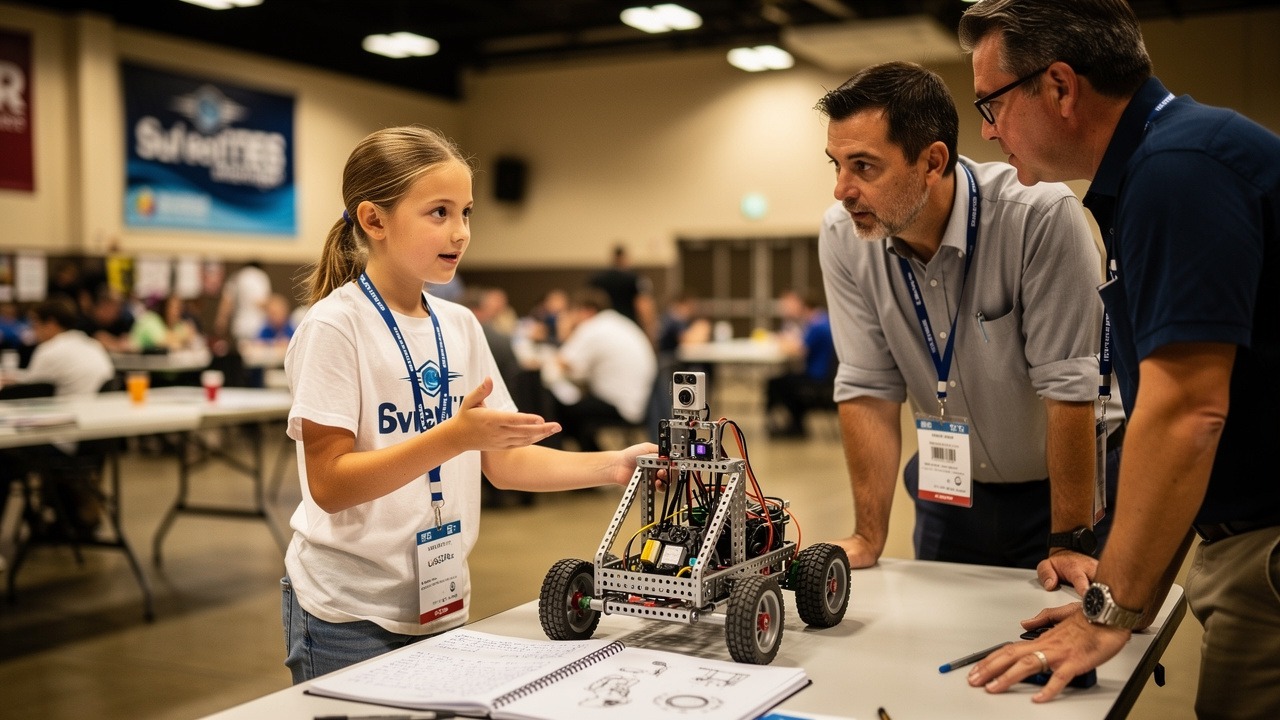
Robotics competitions matter far beyond medals because they build academic options, career interest, and character.
Every NRC or VEX season gives children practice in solving real problems under time pressure, which is hard to copy in normal classes research tracking student perceptions of STEM camp experiences confirms that competitive STEM environments meaningfully shape children's career pathways and long-term aspirations.
VEX Robotics reports that 95% of participants feel more interested in STEM studies and careers after joining, consistent with academic findings on enhancing students' attitudes towards STEM through innovative, technology-enhanced, project-based learning experiences.
In Singapore, strong competition records can also support Direct School Admission applications, especially to schools with STEM or engineering tracks, according to guidance from the Ministry of Education.
Typical Parent Comment: “My child cared less about medals and more about seeing the robot finally complete its run. That resilience carried over into schoolwork, too.”
Soft skills grow as well.
Children learn to explain ideas clearly to teammates and judges, handle failed runs without giving up, and manage time across weeks of preparation.
Making the Right Move This Competition Season
Making the right move this competition season means matching your child to a suitable event, starting early, and sticking to a simple plan.
When parents do that, robotics competition Singapore events feel exciting instead of overwhelming.
Begin by checking which NRC or VEX category fits your child’s age and interests, then read that rulebook with them.
Use the seven‑step framework in this guide as your checklist for the weeks ahead, from team roles to realistic practice.
If you prefer steady structure, explore programmes at Meta Robotics or similar academies so your child trains all year, not just before matches.
With the right preparation and support, your child can grow as a thinker, builder, and problem-solver while developing skills that last beyond one competition season.That way, your child grows as a thinker while your brand quietly shows support for the next generation of innovators.
Frequently Asked Questions
This section answers common questions parents and organizers ask about robotics competition Singapore events.
Each answer is short enough to act on right away without reading the full guide.
Question 1: When does NRC 2026 registration open in Singapore?
Registration periods for NRC 2026 are published by Science Centre Singapore.
Check the NRC page on the Science Centre website or email NRC@science.edu.sg for the latest dates, challenge documents, and sign‑up links.
Question 2: What hardware is allowed in the NRC Regular Category?
The NRC Regular Category uses LEGO®‑based parts for controllers, motors, and sensors.
Common options include LEGO® MINDSTORMS EV3, LEGO® SPIKE Prime, and LEGO® Robot Inventor sets, with a maximum robot size of 25 × 25 × 25 centimeters and free choice of programming software.
Question 3: Can primary school students enter VEX Robotics competitions in Singapore?
Yes. Primary‑school students can join VEX IQ events if they are within the usual 9–14 age range.
Singapore’s VEX calendar often includes scrimmages and tournaments in October and November, so schools and clubs should watch the VEX Robotics SG announcements for updated dates.
Question 4: How many students are typically on a robotics competition team?
Most NRC Regular and Open teams have two or three students plus a teacher or coach.
The preschool KUBO Challenge allows slightly larger groups of two to five children guided by up to two adults, which keeps activities safe and manageable for younger kids.
Question 5: What age does Meta Robotics start training children for robotics competitions?
Meta Robotics accepts children from around age three through the Adapter Programme.
Structured competition‑style work usually begins by about age five in the Ranker Programme and then grows through High Ranker, Ace, and King levels up to mid‑teens, giving plenty of time to prepare for NRC or VEX events.